
The Expert Witness in Peptide Medicine: What Clinicians Should Know
Peptide medicine is having a remarkable decade — and where medicine moves fast, litigation follows. GLP-1 drugs have drawn mass-tort attention. Compounded peptides sit in a shifting regulatory gray zone. Wellness clinics prescribe compounds that no regulator has approved. When those disputes reach a courtroom or a licensing board, someone has to explain the science — and increasingly, that someone comes from endocrinology, sports medicine, or longevity practice.
What an expert witness actually does
An expert witness is not an advocate. Their role is to help the court understand technical questions beyond common knowledge: what a reasonable clinician would have done, whether a treatment caused an injury, how a compound is classified. In most jurisdictions, the expert owes their duty to the court — not to the side that retained them. That distinction sounds abstract until a cross-examiner tests it.
- Standard of care: was the clinician's conduct within the range of reasonable practice for this field, at this time?
- Causation: did the treatment actually cause the claimed harm, to a reasonable degree of medical probability?
- Classification and regulation: what is this molecule legally — a drug, a biologic, a compounded preparation — and what follows from that?
- Damages science: how severe and permanent is the injury, and what does the medical evidence support?
Why peptide cases are unusually hard
In established fields, the expert's job is anchored by settled guidelines, approved labels, and decades of practice patterns. Peptide medicine offers little of that. Many disputed compounds — BPC-157 is the canonical example — have promising animal data but minimal human trials, no approved label, and no professional-society guideline. When the question is whether a clinic met the standard of care, the honest starting point is that the standard itself is contested.
The regulatory terrain compounds the difficulty. Whether a peptide may lawfully be compounded turns on technical criteria like amino-acid count and bulk-substance eligibility — and those statuses change. Telehealth prescribing rules vary by state and keep evolving. An expert who treats open questions as settled has handed opposing counsel the case. Credibility in this field belongs to the witness who labels unsettled law and thin evidence as exactly that.
The evidence-tier problem
Much of what circulates about peptides rests on preclinical work. A capable cross-examiner knows this. The predictable attack: 'Doctor, every study you cited was in rodents, correct?' A witness who has organized the literature by evidence tier — human trials, observational data, animal models, mechanism papers — can answer precisely instead of defensively. The one who relied on forum-grade claims cannot.
Who gets called — and when
- Malpractice claims involving peptide or hormone therapy, where standard of care and causation are disputed.
- Licensing-board complaints against clinicians prescribing unapproved or compounded peptides.
- Regulatory and criminal matters involving compounding pharmacies, clinics, or gray-market distribution.
- Anti-doping proceedings, where an athlete's positive test or possession of a prohibited peptide is at issue.
- Product and personal-injury litigation around widely used peptide drugs, including the GLP-1 class.
If you are asked to serve
For a clinician, a first retention is disorienting. The rules of evidence, the deposition format, and the ethics of the role are all foreign territory. A few principles carry most of the weight.
Opine only within your genuine expertise — stretching is the fastest way to be disqualified. Keep your methodology transparent and your citations current; regulatory statuses in this field can shift within two years. Expect your prescribing history, publications, and prior testimony to be discovered. Your opinion must survive the other side's best argument, not just support your client's.
In an unsettled field, the most credible sentence an expert can say is: 'That question is not yet settled — and here is precisely what is known.'
The deeper reference
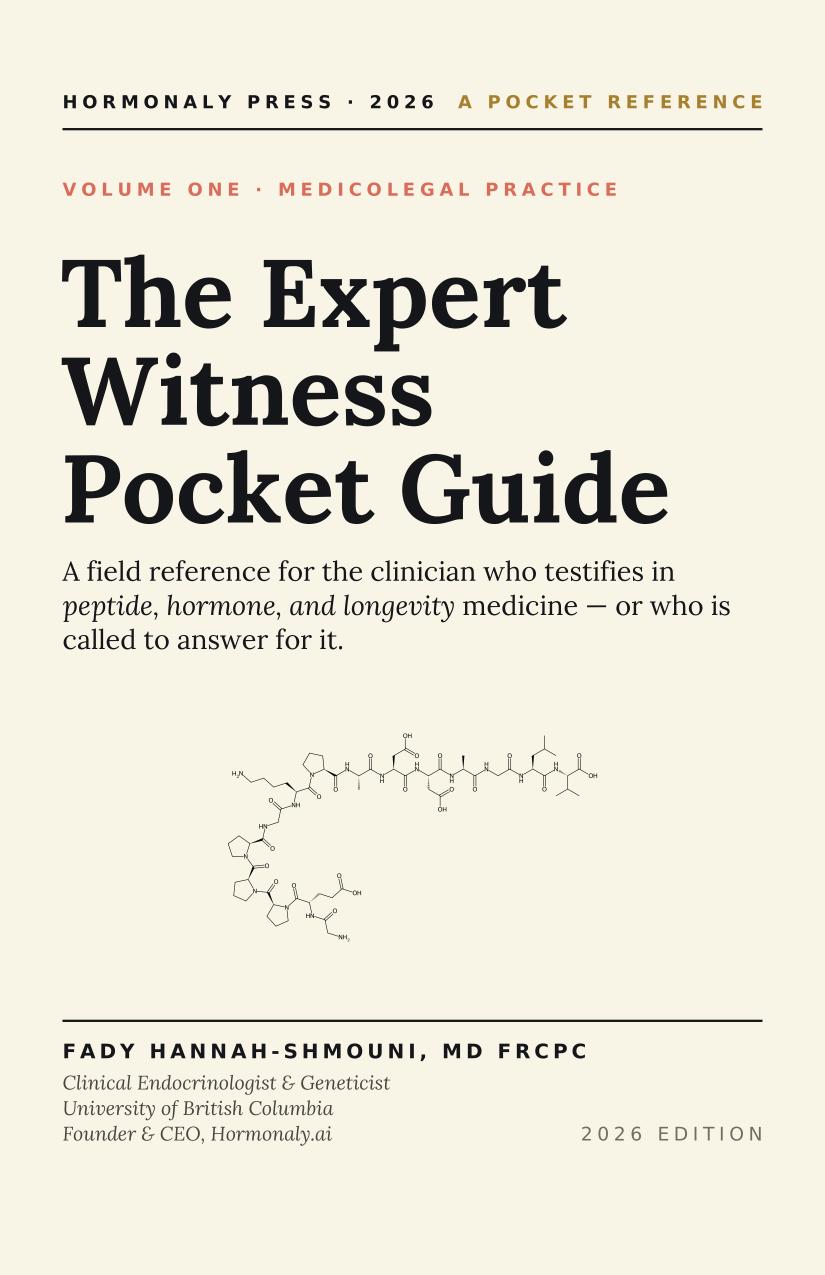
If this terrain is professionally relevant to you, The Expert Witness Pocket Guide maps it one issue per spread. It covers the governing rule, the expert's role, how the other side argues it, and the cross-examination to expect. Unsettled law is labelled — not smoothed over.
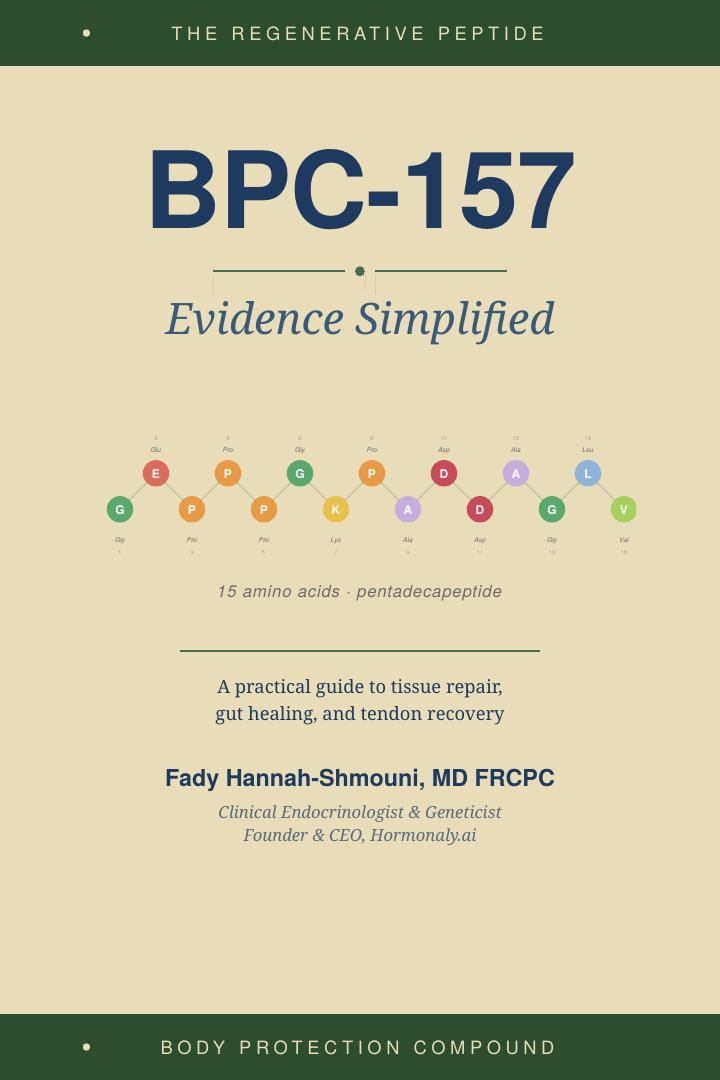
And for the evidence base behind the most litigated recovery peptide itself, our BPC-157 guide walks through the published research claim by claim.
This article is for general education and is not medical advice. Speak with a qualified healthcare professional before making decisions about your health, medications, or supplements.